Bloomfield Hills Schools students in kindergarten through fifth grade are learning to read and write under a new English language arts curriculum that launched this fall.
The district is using two programs, Arts & Letters and 95 Phonics Core. Together they fill a 120-minute daily ELA block built around the science of reading, according to the district.
The March 23, 2026, board agenda included a request to adopt 95 Core Literacy and purchase $423,480 in supporting resources using Section 35m literacy grant funds. Todd Bidlack, assistant superintendent of learning services, was listed as the presenter for the approval request. A district literacy team selected the program after reviewing the state’s literacy-materials rankings list, released in June 2025.
District materials describe the program as aligned with Michigan’s literacy and dyslexia laws, Public Acts 146 and 147 of 2024. Major classroom instruction and dyslexia-screening requirements under Public Act 146 begin in the 2027-28 school year, according to MDE’s implementation timeline.
What the school day looks like
The district describes three daily instructional periods:
- Knowledge Block (60 minutes): Reading and writing through Arts & Letters, organized around topic-based modules that build world knowledge alongside literacy skills.
- Skills Block (30 minutes): Phonics instruction or word study through 95 Phonics Core.
- WIN, or “What I Need” (30 minutes): Small-group work, one-on-one intervention, independent reading, book clubs or extension activities.
Kindergartners start with basic letter sounds and three-letter words. By grades 3 through 5, students move into word study and morphology, including prefixes, suffixes and Greek and Latin roots.
Inside the classroom
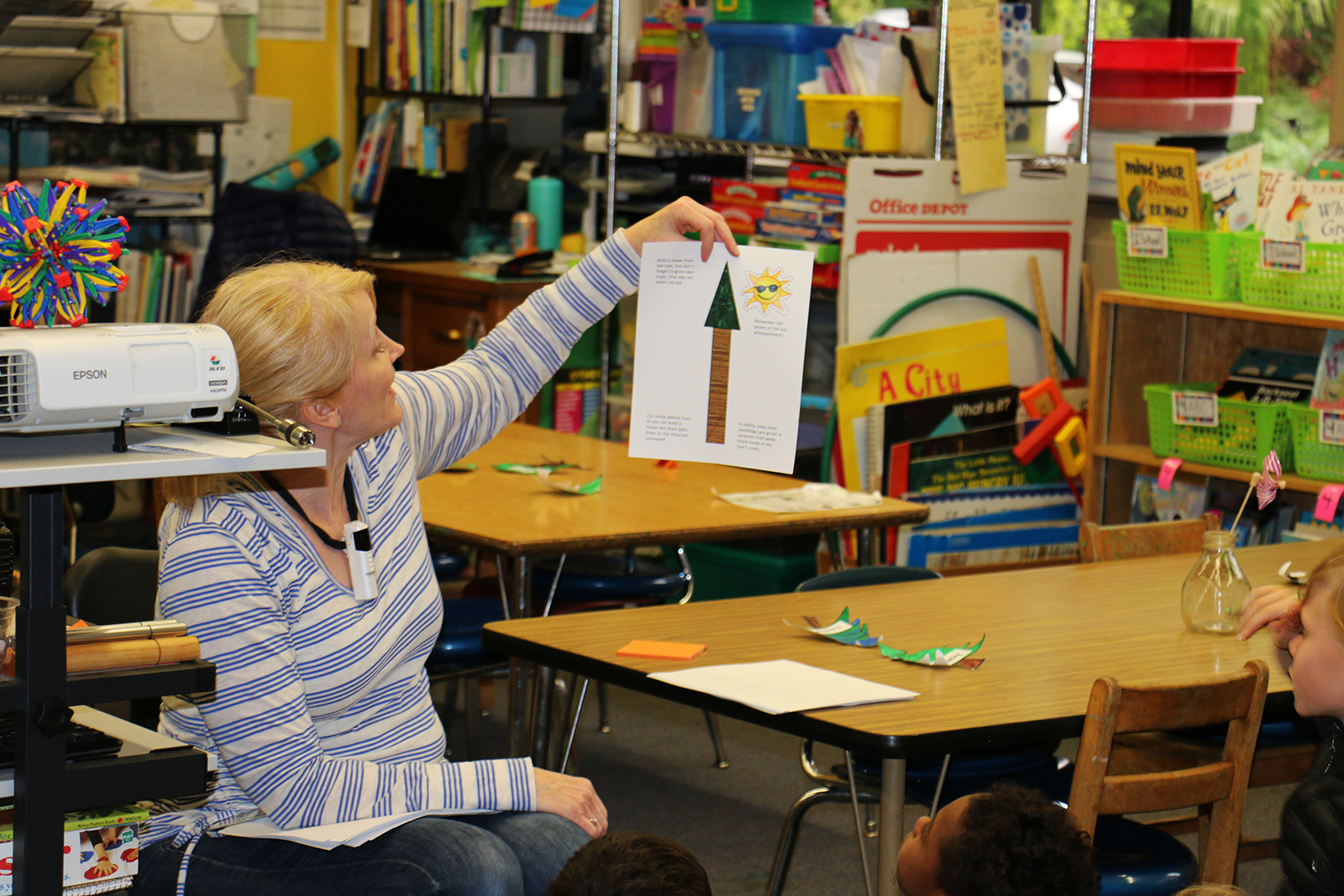
The district’s announcement describes lessons at three elementary schools.
At Way Elementary School, third-grade teacher Natalie Henkelman’s class began the year with a module called “The Sea.” Students read books about sharks, giant squid and Jacques Cousteau, then used context clues to figure out vocabulary words like “depth” and “soundings.”
Students used references to the sea floor and an illustration to interpret unfamiliar vocabulary. A classroom chart recorded both language skills and information learned about the wider world.
At Lone Pine Elementary School, fourth-grade teacher Sheri Bialk invited two guests to connect with the module “A Great Heart.” One was a student’s mother who had received a heart valve transplant. The other was a student’s grandfather, a cardiologist, who explained the kinds of heart problems he treats. Students asked questions about transplants, blood color and heart health.
At Eastover Elementary School, kindergarten teacher Anne Shaya’s class took snack time outside on a fall day as an extension of “The Five Senses” module, describing what they tasted, touched, saw and heard.
How it connects to middle school
The district said the curriculum’s blend of ELA and world knowledge prepares students for the International Baccalaureate Middle Years Programme that begins in sixth grade at Bloomfield Hills middle schools. Arts & Letters weaves science, social studies and the arts into reading and writing lessons.
What parents can do at home
The district offered three suggestions for families:
- Ask children to explain and apply the spelling patterns they are studying instead of relying on memorized lists.
- Encourage 30 minutes of daily reading in books suited to the child’s reading level and interests. Reading aloud together counts.
- Explore the classroom module further through books, documentaries or relevant family experiences.
Liza Lauter, a Bloomfield Hills High School English teacher and K-12 ELA teacher leader, said recognizing recurring patterns helps children read unfamiliar words and apply the same knowledge when spelling, according to the district announcement.